About Michala Sofie
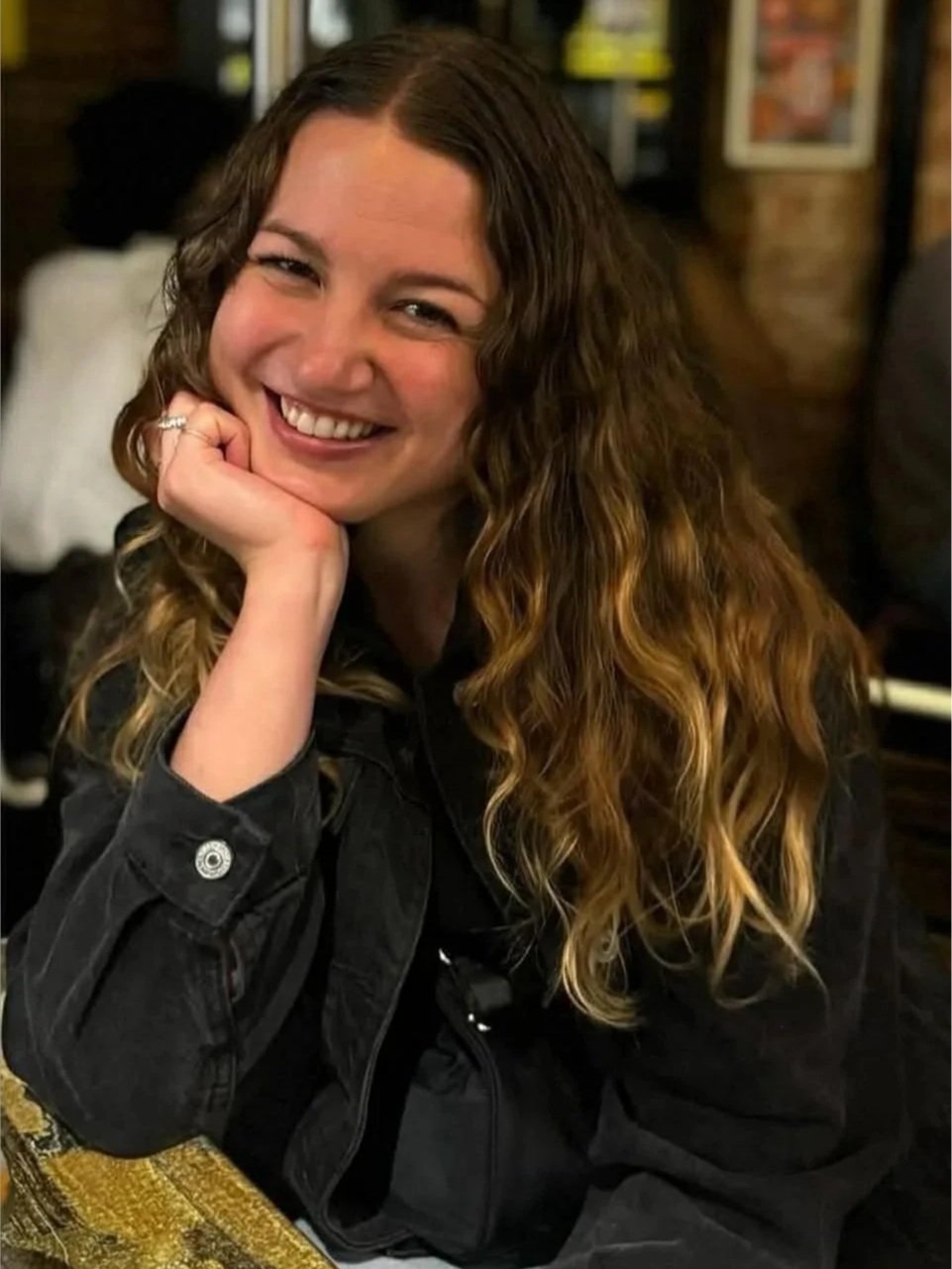
My name is Michala Sofie, and I am an authorised psychologist with an MSc in Psychology from the University of Copenhagen.
I am a member of the Danish Psychological Association and of the Professional Psychological Society for Gender and Sexuality.
I offer individual therapy, couples and relationship therapy, talks, teaching, and professional collaborations, with a particular focus on relationships, gender, the body, and sexuality.
One of the things I value most about the field of psychology is the opportunity to get to meet people in their complexity.
We all carry our own stories, relationships, experiences, hopes, doubts, and contradictions with us. Sometimes it all makes sense. At other times, it does not. That is part of what intrigues me — both as a psychologist and as a person.
What I'm particularly interested in
I am particularly interested in relationships, identity, gender, the body, and sexuality — and, more fundamentally, in how people make sense of their lives, cope with adversity, and find a connection to themselves and others over the course of their lives.
To me, mental well-being is rarely linked only to something internal or individual. We are also shaped by the relationships, communities, norms, opportunities, and limitations that we live within and alongside.
That's why I try to understand people in context.
Among other things, this means that I am curious about how experiences, relationships, the body, emotions, society, and self-understanding influence one another — not in order to arrive at a single, simple explanation, but to make more room for nuance, fluidity, and meaningful ways of understanding what feels difficult.
I try not to view people as problems to be solved quickly, but as individuals with experiences, reactions, and strategies that often make sense in light of the lives they have lived.
Professional Background
I hold an MSc in Psychology from the University of Copenhagen, with clinical psychology as my major.
During my studies, I focused, among other things, on clinical psychology, clinical sexology, the psychology of relationships, emotion regulation, psychodynamic assessment and psychotherapy, as well as qualitative research methods.
I also studied at City University of Hong Kong, where my coursework included topics such as culture, diversity, sexuality, and qualitative methods.
My bachelor’s thesis examined the development of understandings of sexual abuse in child–adult relationships.
My master’s thesis focused on cisgender women’s experiences of pelvic pain in relation to sexual activity. In it, I explored how pain, sexuality, relationships, and cultural understandings can influence one another, and how what is often described as individual or physical may also be understood within relational and societal contexts.
Both projects reflect a broader interest in how the body, sexuality, vulnerability, relationships, power, language, and cultural understandings are intertwined.
That interest continues to shape my work.
I am interested in how we can talk about the body, desire, pain, shame, intimacy, boundaries, abuse, and relationships in ways that are neither too narrow, too pathologising, nor too simplistic.
Research, Analysis, and Academic Communication
I have a particular interest in how psychological knowledge can be developed, researched, and communicated in ways that are both academically nuanced and meaningful in practice.
During my research internship at The Men’s Table in Sydney, I worked on analysing data related to men’s communities, well-being, relationships, masculinity, and experiences of belonging.
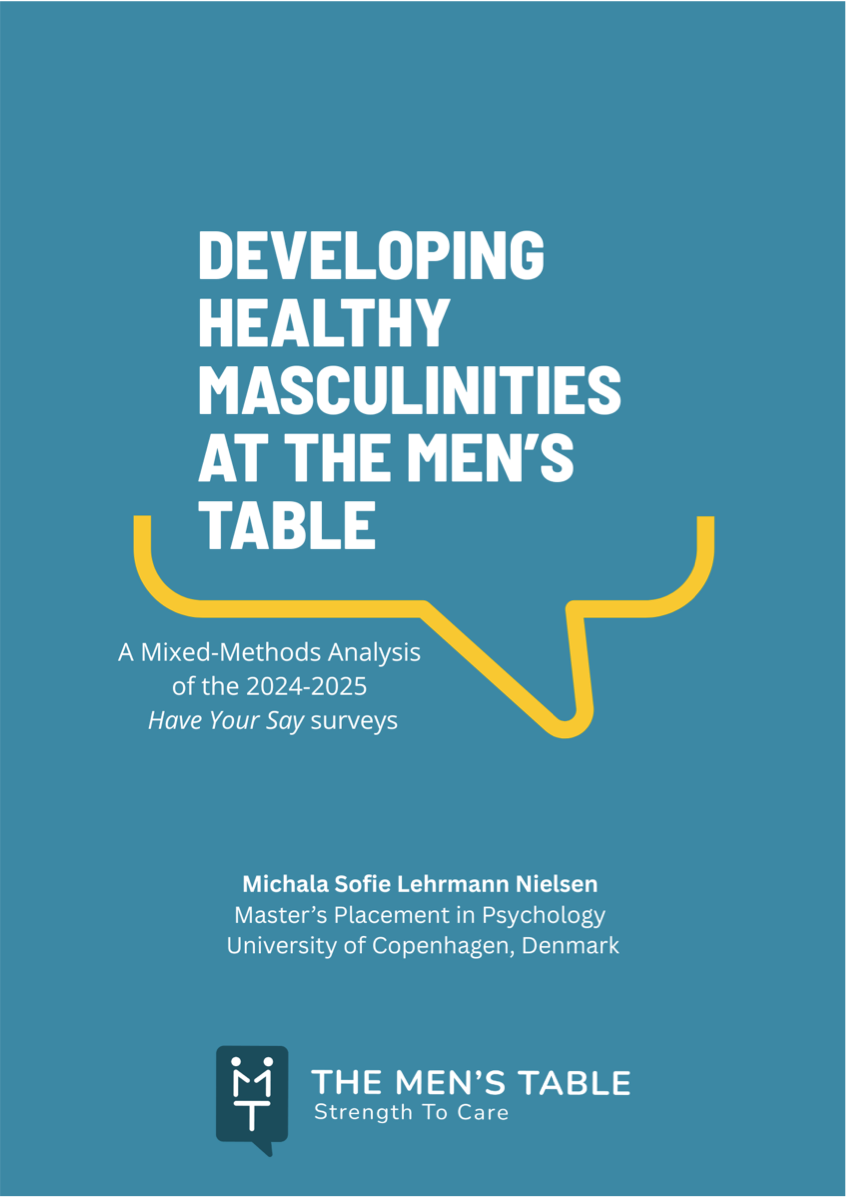
Among other things, this work contributed to the organisation’s publication “Developing Healthy Masculinities at The Men’s Table”, which was based on a mixed-methods questionnaire study involving approximately 2,000 responses.
I contributed to the publication, which was released under my name. It is based on the organisation’s own data and practice-based knowledge and should not be understood as peer-reviewed academic research.
I also worked on topics such as complex situations, diversity and inclusion, community well-being, boundaries, responsibility, and organisational approaches to supporting individuals and groups.
That work deepened my interest in the areas where research, practice, analysis, and people’s lived experiences intersect.
To me, professional knowledge does not belong only in books, reports, or academic contexts. It becomes meaningful when it can be used to ask better questions, foster more nuanced conversations, and support more compassionate ways of understanding people, relationships, and communities.
Experience
I have experience from, among other places, Børns Vilkår, Reden Ung, the Tårnbyhus LGBT+ Crisis Center, Vesterbro Short-Term Psychological Counseling, social psychiatry, hospice work, and organisational work in Australia.
In a range of different contexts, I have worked with children, adolescents, and adults in vulnerable or stressful life situations.
Among other things, this has involved conversations about:
mental distress
loneliness
grief
self-harm
suicidal thoughts
abuse
domestic violence
minority stress
sexuality
boundaries
identity
relationships
complex support needs
I have experience providing support and counselling through phone calls, chat-based conversations, text-based support, and in-person sessions, as well as through crisis intervention, risk assessment, teaching, workshops, support programmes, volunteer coordination, and the development of professional materials.
One of the things I take from these experiences is the importance of genuinely connecting with people, even when life is complex, full of contradictions, or difficult to make sense of.
They have also given me a broad understanding of how psychological work can take many different forms, and how people often need different kinds of support, language, and settings at different points in their lives.
My Professional Approach
My work is informed by several psychological perspectives, including narrative, systemic, psychodynamic, attachment-based, emotion-focused, body-oriented, trauma-informed, and norm-critical approaches.
I am also curious about newer and related ways of understanding the nervous system, parts of the self, coping strategies, attachment, bodily reactions, and relational experiences — including those offered by polyvagal theory and IFS-inspired approaches.
This does not mean that therapy follows a fixed formula.
I adapt the work to the person or relationship I am meeting, and to the questions, experiences, and wishes that are relevant in the particular situation.

I am interested in how we can explore what is weighing on someone without reducing a person to a symptom, a diagnosis, or a single narrative.
Sometimes therapy is about understanding recurring patterns.
At other times, it is about finding words for something that has been difficult to say aloud.
It can also be about recognising boundaries, understanding reactions, processing experiences, exploring relationships, or making more room for what feels important.
To me, therapy is not a place where I tell you who you are.
Rather, it is a collaborative process in which we can explore together how your experiences, relationships, and life circumstances have shaped you — and what possibilities might open up from there.
Continuing Education, Professional Development, and In-Depth Study
As a psychologist, I am committed to ongoing professional development.
To me, professional development is not only about learning new methods or concepts, but also about continually reflecting on my own practice, identifying blind spots, staying professionally up to date, and remaining in dialogue with other professionals.
I therefore regularly engage in supervision, courses, training, and professional communities that support my clinical work and my broader areas of professional interest.
Through my education, clinical experience, and further professional study, I have focused, among other things, on:
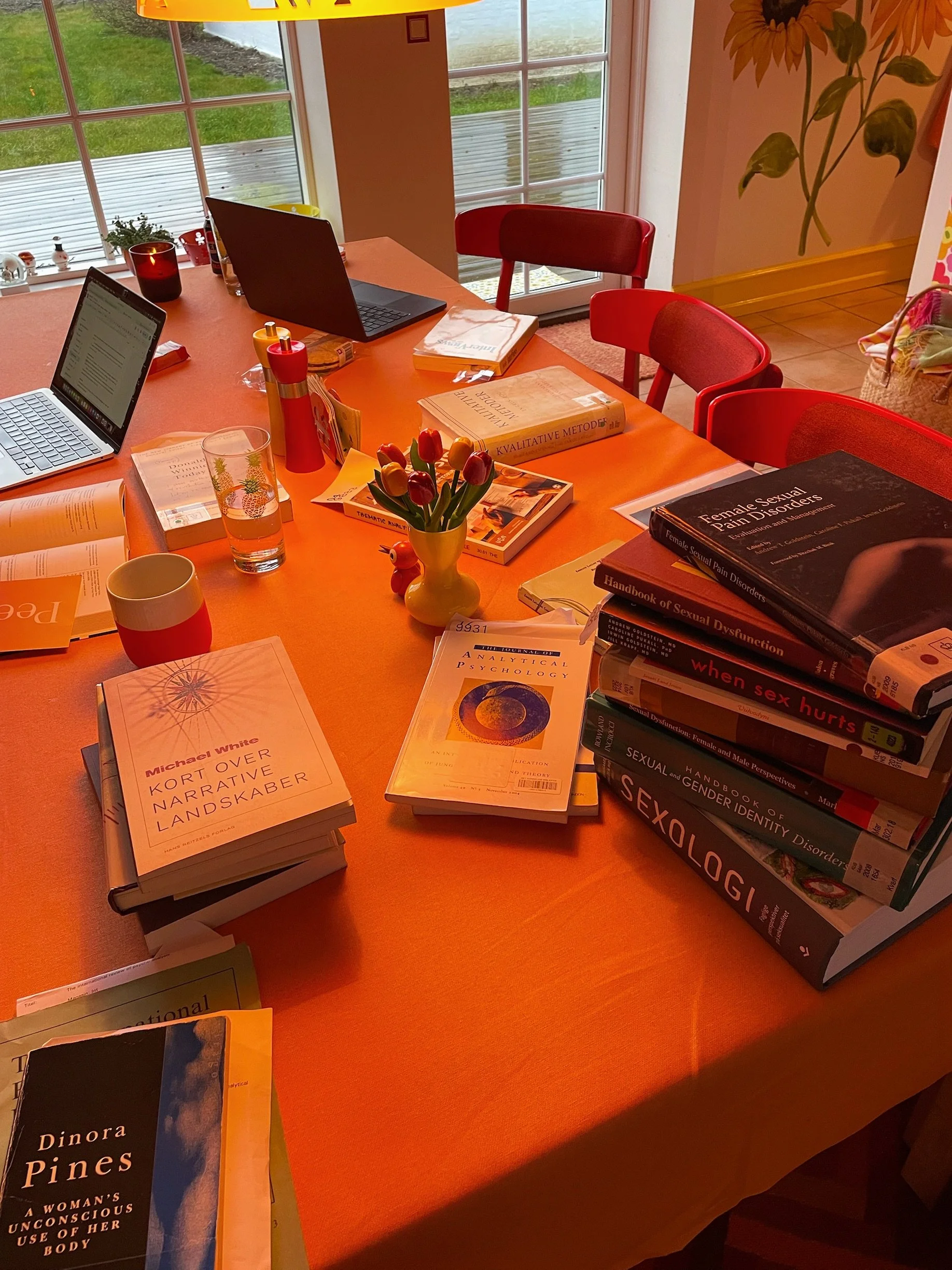
Gender, Body, Sexuality, and Norms
My work has focused on clinical sexology, culture, diversity and sexuality, minority stress, gender identity, sexuality, consent, boundaries, intimate partner violence, and norm-critical perspectives.
These are areas that are closely linked to my interest in how people understand themselves and one another in relation to the body, gender, sexuality, relationships, and social norms.
Relationships, Romantic Relationships, and Attachment
I have engaged deeply with the psychology of relationships, emotion-focused perspectives, sex, desire, and attachment, as well as approaches used in couples and sex therapy.
These are the perspectives that particularly interest me in my work with relationships, intimacy, communication, trust, boundaries, and the patterns that can emerge between people who care about one another.
Trauma, the Body, and the Nervous System
I have also explored complex trauma, polyvagal theory, mindfulness-based perspectives, bodily reactions, and ways of understanding how people may try to protect themselves when faced with difficult experiences.
I do not use these perspectives as fixed explanations for what happens within a person. Rather, they can be helpful as possible frameworks for understanding reactions, relationships, boundaries, sensory experience, safety, and connection.
Crisis, Grief, and Stress
Through both coursework and practical experience, I have worked with mental health first aid, grief and loss, conversations about suicidal thoughts and crises, risk assessment, child neglect, mandatory reporting, chronic illness, and conflict resolution.
I do not see these areas as separate from ordinary human experiences and situations in which it is often especially important to have a clear, sensitive, and responsible frmaework for the conversation.
Therapeutic Frameworks of Understanding
I am particularly interested in narrative, systemic, psychodynamic, emotion-focused, trauma-informed, and IFS-inspired perspectives.
I do not view theories and methods as something that can explain everything. Rather, they can help open the door to more questions, more perspectives, and more precise ways of listening.
At the same time, I am curious about the points where psychology intersects with culture and contemporary society. I regularly read academic literature and also attempt to keep up with relevante books, films, podcasts, the media, social media, political discussions, and the broader public conversation.
This is not because therapy should be a place for hasty judgments, but because our understandings of the body, gender, sexuality, relationships, normality, and well-being are constantly shaped by the communities, images, language, and narratives we are part of.
It matters to me that my professional knowledge does not remain static, but continues to evolve through the interplay of research, supervision, practical experience, culture, society, and the people I work with.

Relationships, gender, the body, and sexuality
I focus particularly on themes related to relationships, gender, the body and sexuality.
These may include, among other things, identity, intimacy, desire, boundaries, shame, physicality, pain, social norms, minority experiences, communication, trust, jealousy, betrayal, conflicts, and relational patterns.
I strive to approach these topics in a way that is exploratory, sex-positive, norm-conscious, and respectful of people’s different ways of living, experiencing, and relating.
For me, it is not about placing people into categories, but about creating a space where it becomes possible to talk more freely, with nuance and sensitivity, about what may feel difficult, vulnerable, or meaningful.
A little bit about me, too
When I'm not working as a psychologist, I often find energy in nature, movement, travel, books, films, communities, and good conversations.
I think I am simply a curious person by nature. I like immersing myself in things — reading, listening, watching films, following public conversations, and noticing the ways people try to understand themselves, one another, and the times they live in.
I am often drawn to what lies just beneath the surface — small shifts in language, relationships, culture, and everyday life that may reveal what we long for, what we take for granted, and what is changing.
I enjoy both reflection and being out in the world. I enjoy being on the move, meeting people, and discovering new places, while also returning to quieter things: conversations, books, films, nature, and the small details that sometimes say more than one first realises.
For me, psychology is therefore not only about problems, symptoms, or treatment. It is also about relationships, hope, meaning, identity, community, and the ways we try to make room for what matters to us.
Perhaps that is also part of what I try to bring to my work as a psychologist: a curiosity about the stories, experiences, and relationships that people bring with them, without assuming that there is one single, definitive story about who a person is.
Sometimes, conversations can create a little more space around what previously felt stuck and open up new ways of understanding oneself, others, or the situation one is in.
Would you like to know more?
If you are wondering whether I might be the right psychologist for you, you are welcome to read more about my approach and the services I offer, or to contact me.
You do not need to know exactly what you need help with. Together, we can explore what is on your mind and where it might make sense to begin.